


 English
  русский
  عربى
عربى  Français
 Metal Steel Door
Product
Didn't find the product you like?
We gonna help you find matched one fast
Popular Products
Didn't find the product you like?
We gonna help you find matched one fast


+86-13967452036
Smart door systems combine multiple access methods with advanced digital communication to improve both convenience and security. Modern designs integrate Ultra-Wideband (UWB), Near Field Communication (NFC), and biometric authentication, allowing users to interact with doors in several ways while maintaining controlled entry.
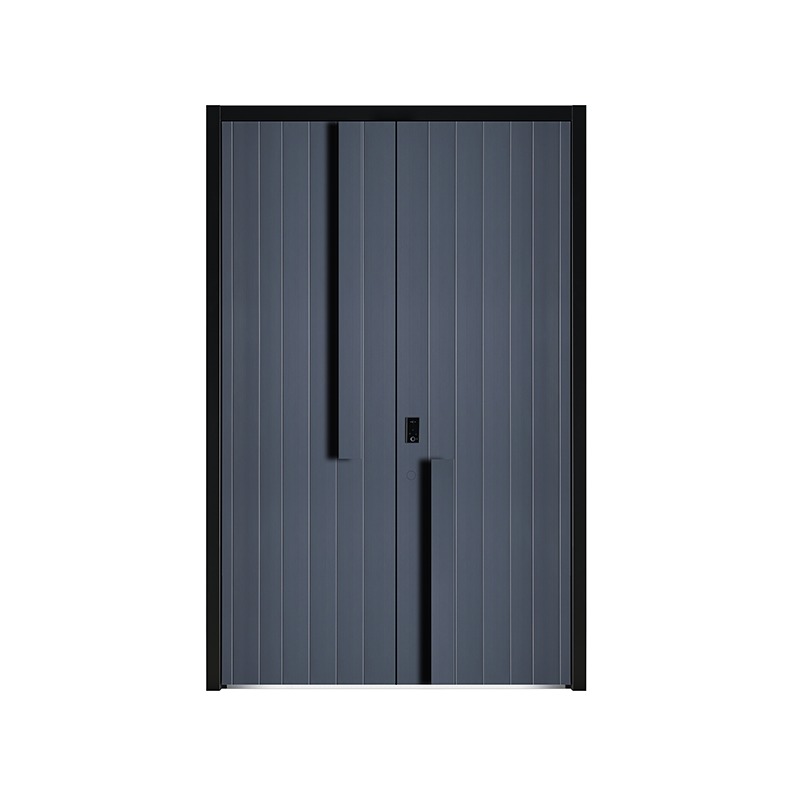
Ultra-Wideband technology enables smart doors to detect the precise location of authorized users. By measuring the distance between a device and the door, UWB allows doors to respond when a registered device is nearby, supporting hands-free unlocking. UWB also provides directional sensing, which can confirm the approach direction of users and be combined with other authentication methods for layered security.
NFC integration allows contactless access through smartphones or digital key cards. Users can tap a registered device on the door sensor to gain entry. NFC operates over very short distances, ensuring that only devices in immediate proximity can activate the lock mechanism. Combining NFC with UWB detection ensures both presence and authentication are verified before the door opens.
Biometric verification adds an additional layer of security. Fingerprint and facial recognition sensors verify individual users without relying on physical keys. PIN code entry remains an additional option, while many smart doors still include mechanical keys to maintain compatibility with traditional access methods. Multi-modal authentication, which combines biometric, digital, and mechanical approaches, offers flexibility for different users and scenarios.
Smart doors are often integrated into home automation systems through standardized communication protocols. These protocols allow doors to interact with other devices, including sensors, alarms, and monitoring systems. Users can configure access permissions for specific devices or individuals, monitor entry activity, and receive notifications for door usage. Some implementations use local communication for authentication, ensuring functionality without dependence on external networks.
The physical and electronic design of smart doors incorporates sensors to monitor door status, detect tampering, and confirm lock engagement. The combination of UWB detection, NFC authentication, and biometric verification ensures that entry occurs only under the intended conditions.
Smart doors are installed in residential and commercial spaces and often allow retrofit upgrades without replacing entire door frames, making them suitable for both new constructions and existing buildings. Centralized control, layered security, and multiple methods of entry provide both convenience and reliability, meeting diverse access needs. In addition, these systems can integrate with building management tools, enabling detailed access logs and customizable permission settings for different users. The combination of flexible installation, comprehensive monitoring, and multi-modal authentication ensures practical usability across varied environments.
In summary, smart doors integrate advanced sensing technologies with multiple authentication methods to manage access effectively. UWB provides spatial detection, NFC allows contactless entry, and biometrics verify identity. Together with mechanical keys, these systems provide secure, flexible, and controllable access.
Frequently Asked Questions
Q: How does UWB improve smart door access?
A: UWB measures distance and direction, allowing doors to detect authorized users nearby for hands-free or context-aware unlocking.
Q: What is multi-modal authentication?
A: It combines different methods, such as biometrics, PIN codes, NFC, UWB, and mechanical keys, to verify access.
Q: Can smart doors operate without internet?
A: Yes, authentication can occur locally through NFC or UWB, ensuring access control without network connectivity.
Q: Why are multiple authentication methods important?
A: They increase flexibility, accommodate different user preferences, and improve security by requiring more than one verification step.

 Previous