


 English
 русский
 عربى
 Français
Metal Steel Door
Product
Didn't find the product you like?
We gonna help you find matched one fast
Popular Products
Didn't find the product you like?
We gonna help you find matched one fast


+86-13967452036
The sound of a door closing is made by a few small contacts: a latch bolt striking a plate, a spring snapping back, a handle returning to rest. A Silent Side Lock is designed around those contacts, so the bolt, the spring and the strike meet softly instead of with a metallic knock. In homes with sleeping children, in hotel corridors and in offices with meeting rooms, that difference is heard many times a day, and it is built into the lock body before the lock is mounted on a door.
Noise at a door edge usually has four sources:
A Silent Side Lock addresses these in sequence. A cushioned or rounded bolt tip softens the initial impact, a smooth bolt face reduces scraping on the strike, a tuned spring controls the return, and a tight fit between the parts removes the rattle.
Quiet takes more than a soft tip. It depends on how closely the metal parts fit, because clearance between a bolt and its housing becomes a click once the lock has seen repeated use. A Silent Side Lock and its trims draw on brass, stainless steel, iron and bronze, the metals used for door lock decorative pieces and trims, and each is shaped by casting or forging. Detailed casting and die-casting hold complex outlines with consistent dimensions, while forging gives dense, even material in parts that take repeated contact.
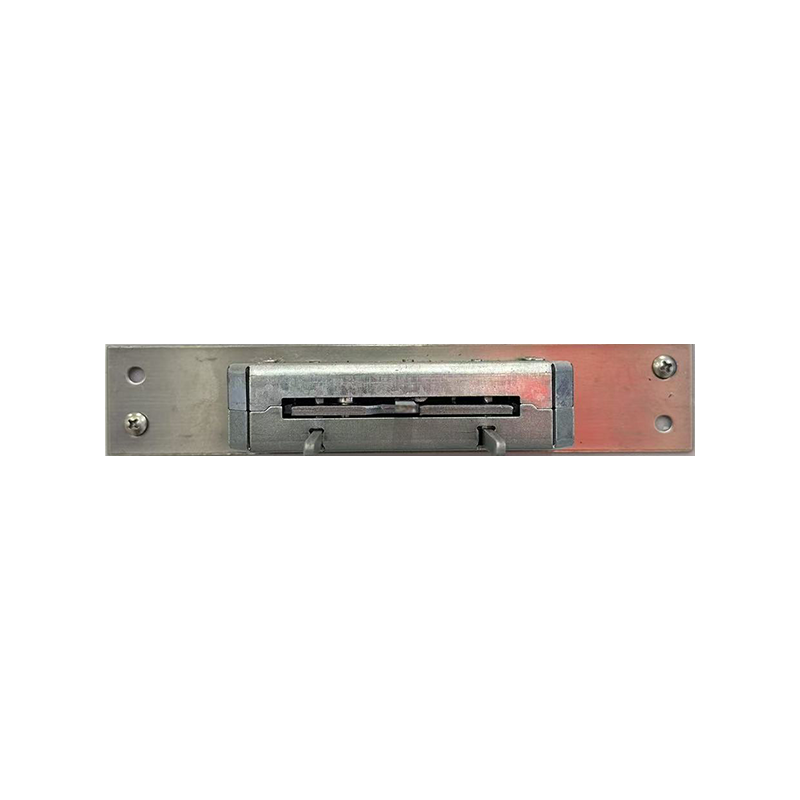
The door accessories range lists the Silent Side Lock alongside the Black Side Lock Trim and the Fingerprint Lock Edge Reinforcement Plate, so the side of the door is treated as one assembly: the lock, the trim that covers the edge and the plate that strengthens the cut-out. A Silent Side Lock that sits in a trim and plate made to matching dimensions has less room to shift, so the part stays quiet after installation as well as on the bench.
A rough surface on a bolt or strike lip scrapes and wears. After casting or forging, parts are polished, coated or finished brushed, matte or polished, with antique patinas as another option. For a Silent Side Lock, a smooth finish on the contact faces has a practical use as well as a visual one, since the bolt glides over the strike with less friction, and a durable coating protects the finish from the wear of daily use. Stainless steel resists corrosion, which keeps the sliding surfaces smooth in humid rooms such as bathrooms and coastal buildings.
Modern doors often carry a fingerprint or smart lock, and the cut-out for it weakens the door edge. A reinforcement plate restores that strength, and the plate also keeps the lock body square in the cut-out. A lock held square closes quietly, because the bolt meets the strike straight on instead of at a slight angle. Some designs also add anti-tamper elements, which sit within the same trim, so security parts do not add extra moving pieces that could rattle.
Doors differ in thickness, edge profile and style, and a lock quiet on one door can knock on another. Manufacturers of door lock decorative pieces offer custom designs, materials and finishes, so a Silent Side Lock can be matched to the door edge, the trim colour and the architectural theme of a property, whether that is a classic entrance or a minimal interior. Black trim suits modern interiors, while brass or bronze fits traditional ones, and a Silent Side Lock keeps the same quiet bolt action behind either look.
The practical test is simple: close the door slowly and then at normal speed, and listen to the bolt, the strike and the handle return. A Silent Side Lock shows its work in what is not heard, with no click on a gentle close, no scrape on the strike and no ring from the trim. Cast and forged bodies with a smooth finish and a snug fit give that result across the life of the door.
 Previous
