


 English
  русский
  عربى
عربى  Français
 Metal Steel Door
Product
Didn't find the product you like?
We gonna help you find matched one fast
Popular Products
Didn't find the product you like?
We gonna help you find matched one fast


+86-13967452036
A Steel Entrance Door plays a critical role in both residential and commercial buildings. It is not just a panel that closes an opening; it is a structural component that affects protection, durability, insulation, and overall architectural appearance. For projects such as villas, office buildings, and mixed-use developments, selecting the right door solution requires attention to material composition, internal structure, surface treatment, and manufacturing standards.
Working with a qualified Steel Entrance Door Manufacturer allows project planners to align technical specifications with design requirements while maintaining production consistency.
The core of any Steel Entrance Door is its internal steel frame. A reinforced frame provides rigidity, resists deformation, and maintains alignment over years of use. In high-traffic buildings, door panels frequently experience impact, vibration, and environmental stress. Without a stable internal structure, even visually attractive doors may suffer from sagging or locking misalignment.
Turkish-style steel-frame armored doors are built around a high-grade steel skeleton. The steel is processed with corrosion-resistant treatments, reducing the risk of rust in humid or coastal climates. This structural foundation supports additional armored layers and decorative panels without compromising strength.
For contractors and developers, long-term dimensional stability reduces maintenance costs and installation callbacks.
A Steel Entrance Door does not need to look industrial. Turkish-style armored models integrate traditional motifs, geometric patterns, and engraved surfaces inspired by historic architecture. These elements are not surface stickers; they are crafted into the door panel through advanced engraving and forming processes.
This approach creates visual depth while retaining the mechanical integrity of the door. The decorative steel skin remains part of the protective structure. For properties that emphasize architectural identity, such as villas or boutique commercial spaces, this combination of cultural detail and engineered strength offers design flexibility without sacrificing functionality.
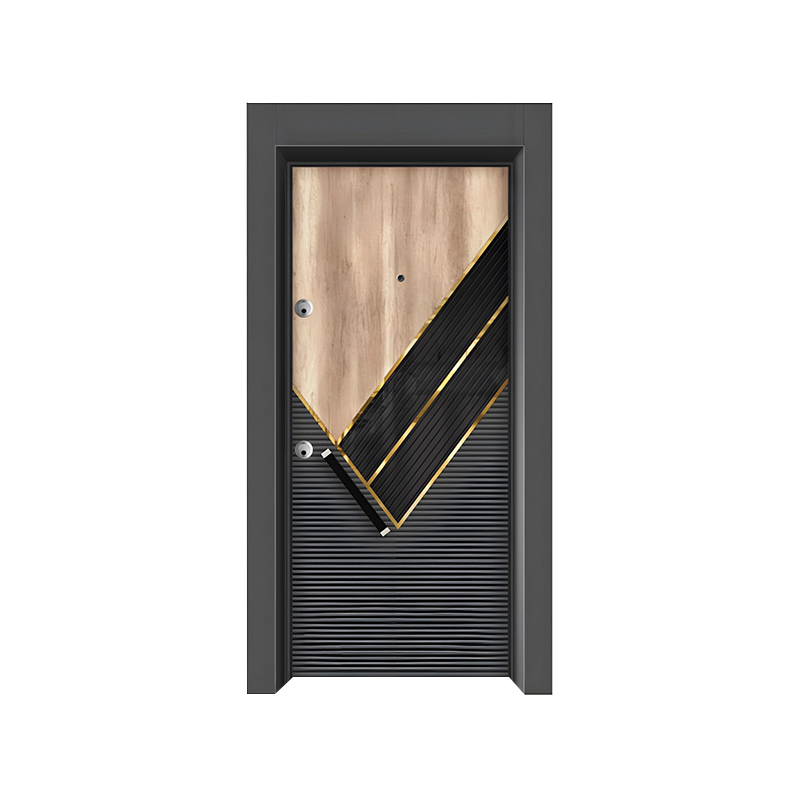
A Steel Entrance Door Manufacturer with in-house fabrication capability can adjust patterns, panel thickness, and finishing options according to project specifications.
Outdoor entrance doors must tolerate temperature fluctuation, moisture, and UV exposure. Steel doors without adequate treatment can corrode or experience coating degradation over time.
Turkish-style armored doors undergo anti-corrosion processing before finishing. Powder coating or specialized surface treatments create a protective barrier that shields the steel from environmental exposure. Combined with sealing strips and insulated cores, this design also helps block drafts and moisture infiltration.
For projects in regions with heavy rain, snow, or intense sunlight, these treatments extend the operational life of the Steel Entrance Door and maintain its appearance.
Energy performance is increasingly relevant in building design. Many Steel Entrance Door models incorporate insulating materials within the core structure. These materials help regulate interior temperature by reducing thermal transfer.
An insulated Steel Entrance Door contributes to improved climate control in both residential and commercial settings. Reduced air leakage around the frame and panel edges supports HVAC efficiency and can lower operational costs over time.
When discussing specifications with a Steel Entrance Door Manufacturer, it is practical to review insulation type, door thickness, and sealing systems to align with local building standards.
Entrance doors experience daily use and environmental exposure. Replacing a poorly manufactured unit can be disruptive and costly. Investing in a structurally reinforced Steel Entrance Door reduces lifecycle risk and supports stable building performance.
 Previous