


 English
  русский
  عربى
عربى  Français
 Metal Steel Door
Product
Didn't find the product you like?
We gonna help you find matched one fast
Popular Products
Didn't find the product you like?
We gonna help you find matched one fast


+86-13967452036
A standard residential steel door and a villa entrance door can share the same square footage of opening, yet buyers researching this category quickly notice the price gap runs far wider than the size difference explains. The gap comes from what happens before assembly: material selection, hand-carved detailing, and a finishing process that treats the door as a decorative centerpiece rather than a functional opening alone. Buyers who compare quotes on square footage alone, without accounting for these upstream decisions, often end up confused about why two doors described the same way in a spec sheet arrive at very different price points.
High-quality hardwoods such as mahogany or walnut are the common starting point for a villa entrance door built in a traditional carved style, chosen specifically for their durability and rich grain patterns rather than cost efficiency. These woods are treated and prepared before shaping begins, since a door meant to remain a property's focal point for years needs material that resists warping and cracking as much as it needs visual appeal. Buyers sourcing this category should ask which specific hardwood species a factory defaults to, since substituting a lower-grade wood under the same product name is a common way costs get quietly reduced on what is sold as a villa entrance door.
Skilled artisans carve and shape the motifs that define this category of villa entrance door using precision carving or relief techniques, working details like dragons, phoenixes, or floral patterns into the door face and frame. Each symbolic element carries cultural meaning tied to prosperity, protection, or good fortune, which is part of why buyers in markets that value this symbolism specify hand-carved detailing rather than a molded or printed imitation. Confirming whether a supplier uses genuine relief carving versus a surface-applied pattern is worth doing before ordering, since the two methods look similar in photographs but differ significantly in durability and tactile quality.
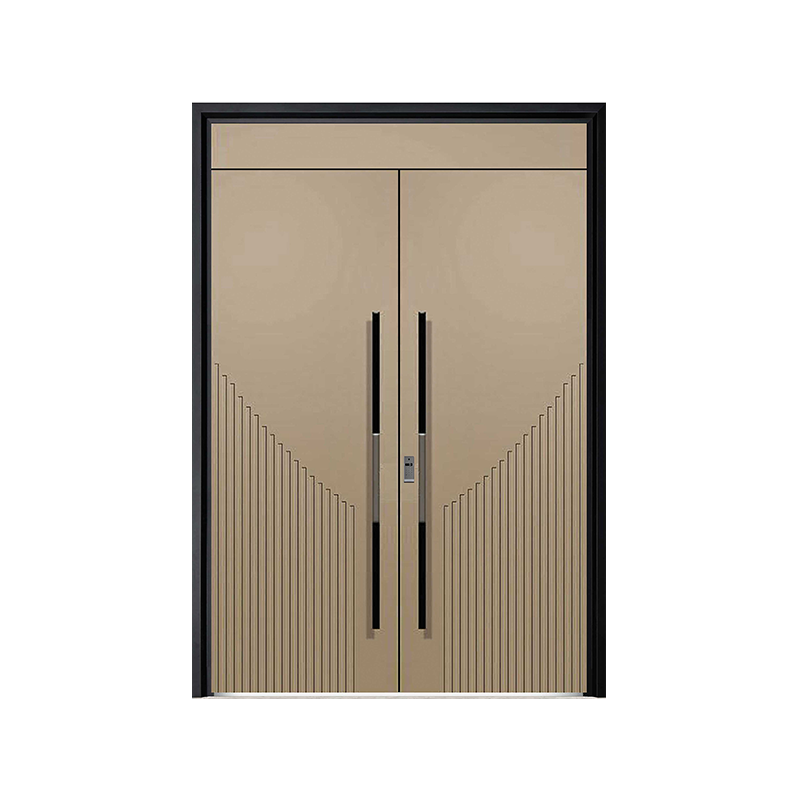
Color treatment techniques such as gilding or lacquer application give a villa entrance door its glossy, radiant finish, adding depth to the carved design while also protecting the wood surface beneath. This finishing stage happens after quality control checks confirm the carved structure meets both aesthetic and structural standards, meaning finish problems traced back to this stage are usually easier to correct than problems originating in the wood or carving itself. Buyers should ask how many finish coats are applied and what protective topcoat is used, since finish durability affects how well the door holds its appearance in direct sun or humid conditions over years of exposure.
Handles, hinges, and other metal hardware on a villa entrance door are typically designed to reference traditional metalworking techniques, complementing the carved woodwork without visually competing with it. Hardware that looks generic or mismatched against an otherwise detailed door face undermines the overall design more than buyers often expect, since hardware sits at eye level and hand height where it receives constant close-up attention from anyone approaching the entrance. Specifying hardware finish and style alongside the wood and carving specification, rather than treating it as an afterthought, keeps the finished door visually consistent.
|
Factor |
Villa Entrance Door (Carved Style) |
Standard Residential Door |
|
Primary material |
Hardwood, mahogany or walnut |
Steel or composite panel |
|
Surface detail |
Hand-carved motifs, relief patterns |
Flat or minimally textured surface |
|
Finish process |
Gilding or lacquer, multiple coats |
Standard paint or powder coating |
|
Hardware design |
Custom, complements carved detailing |
Standard hardware, functional focus |
|
Typical positioning |
Villas, luxury homes, cultural properties |
General residential and commercial use |
While the name suggests a purely residential application, a villa entrance door built in this style also appears in boutique hotels, restaurants, and cultural institutions seeking to reflect a specific aesthetic heritage at the entrance. Buyers sourcing for commercial hospitality projects should specify whether the door needs to meet any additional durability requirements tied to higher foot traffic, since residential-grade hardware and hinges may not hold up the same way under frequent commercial use even when the wood and carving specification remains identical.
 Previous