


 English
 русский
 عربى
 Français
Metal Steel Door
Product
Didn't find the product you like?
We gonna help you find matched one fast
Popular Products
Didn't find the product you like?
We gonna help you find matched one fast


+86-13967452036
A steel entrance door can close cleanly on installation day and still show a gap at the latch side a year later. The cause is often not the lock or the frame but the hinge side, where the leaf's full weight pulls on a few screws every time the door swings. A Black Hinge Reinforcement Plate addresses that point directly by giving those screws a wider area of metal to hold against.
A door leaf hangs from its hinges like a shelf from its brackets. The heavier the leaf, the more the upper hinge is pulled outward and the lower hinge is pushed inward, and that leverage concentrates on small contact areas around each screw. Steel doors with insulating cores weigh more than hollow interior doors, and entrance doors open and close many times a day. Over time, this repeated loading can loosen screws or enlarge the holes they sit in. A Black Hinge Reinforcement Plate spreads the load across a larger surface, so each screw works against more material instead of a thin edge.
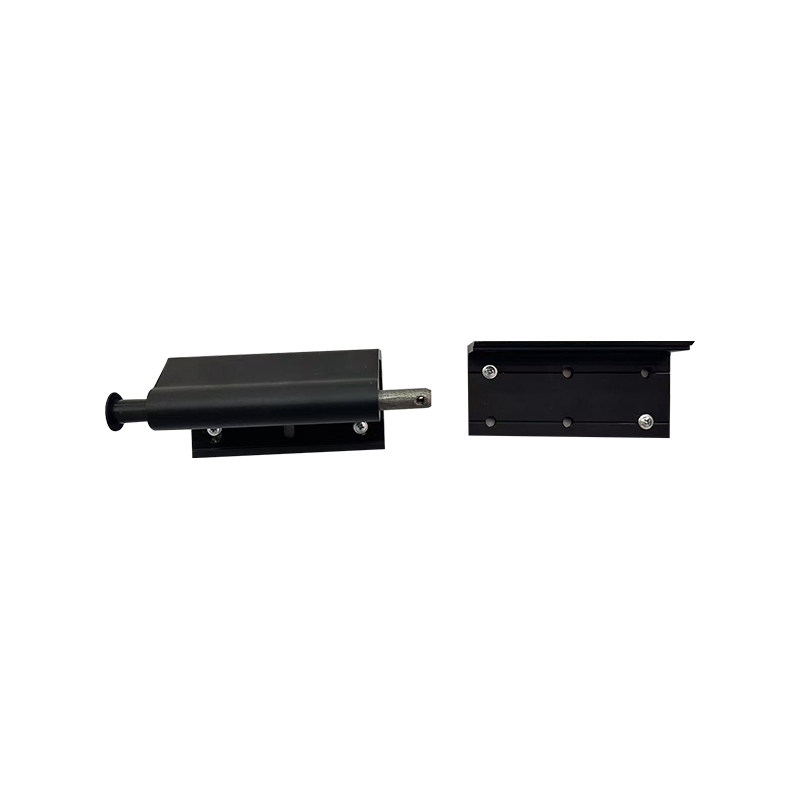
Hinge leaves are thin plates, and the door skin or frame they attach to may be thin as well. Sheet steel can dimple or tear around a screw when the load is concentrated, and softer frame timber can crush under the same pressure. Reinforcement placed behind or alongside the hinge gives the fixing a firmer base, and installers can add it before the leaf is hung, when access is easiest. A Black Hinge Reinforcement Plate suits this step because it is flat, uniform, and shaped for the hinge position rather than improvised from scrap metal.
Black entrance doors are a familiar sight on residential projects, and on a dark door a bright steel hinge stands out. Specifiers often choose black hinges to keep the edge of the leaf visually consistent. Any plate or plate edge that remains visible draws the eye for the same reason if its colour does not match. Using a Black Hinge Reinforcement Plate alongside black hinges helps maintain a consistent appearance around the hinge area. A coated surface may also provide corrosion protection where moisture reaches the door edge. Powder coating is a common finish for hinge hardware, particularly in outdoor or humid environments.
Adding metal at the hinge position changes the geometry slightly. A plate that is too thick can narrow the clearance between leaf and frame, and a plate that sits out of line with the hinge screw pattern may leave some screws without full support. Screw length matters too: on a thin door skin, a screw that is too long can poke through or hit the core. Fitters usually check the plate against the hinge before drilling, confirm that the screw holes line up, and swing the door to see whether the gap stays even from the upper corner to the lower. Checking a Black Hinge Reinforcement Plate in these three ways helps reduce unexpected adjustments during installation.
Hinges that squeak, feel loose, or turn stiff are often treated as maintenance issues, and cleaning or lubricating can help. A door that rubs at the upper corner of the latch side, or whose latch no longer lines up with the strike plate, may indicate movement on the hinge side instead. In these cases, tightening screws may provide only temporary relief if the surrounding material has weakened. Adding a Black Hinge Reinforcement Plate during the repair can provide additional support for the fixings, after which the installer can recheck the door alignment.
Hinge problems rarely announce themselves early. A Black Hinge Reinforcement Plate is a small part, but its purpose is to help keep the door in its intended position. On heavy or frequently used doors, considering reinforcement during the initial installation may be easier than correcting sag after the door has been in service for a year.

 Previous
