


 English
  русский
  عربى
عربى  Français
 Metal Steel Door
Product
Didn't find the product you like?
We gonna help you find matched one fast
Popular Products
Didn't find the product you like?
We gonna help you find matched one fast


+86-13967452036
Building entrance doors are more than simple access points, they influence how people enter, move through, and experience a space. Different buildings require different entrance solutions, so a variety of door types have developed to match different environments, traffic patterns, and design needs.
Each type serves a specific purpose in real use conditions, whether it is supporting smooth movement, saving space, or shaping the visual identity of a building.
Buildings are designed for different functions, so their entrances must respond to different movement patterns and usage demands. A residential building usually has steady but limited traffic, while commercial or public spaces may need to handle continuous flow throughout the day, which naturally leads to different structural solutions for entrance doors.
Instead of using a single universal design, entrance doors are adapted based on how people move, how often they pass through, and how much space is available around the entry area.
Swing entrance doors are one of the traditional types and they operate by opening inward or outward through a simple pivot motion, making them easy to understand and widely used in residential buildings and smaller commercial spaces where traffic is moderate.
Their structure is straightforward and does not rely on complex mechanisms, which allows them to be used in many architectural styles while still providing a familiar and direct way of entering or exiting a building.
Sliding entrance doors move horizontally along a track instead of opening outward or inward, which helps save space near the entrance and makes them suitable for buildings where the surrounding area is limited or needs to remain unobstructed.
They are often used in commercial environments where continuous movement is important, and their smooth sliding motion allows people to pass through without interruption while maintaining a steady flow of entry and exit.
Automatic entrance doors open and close without physical contact, responding to movement or presence near the entrance, which makes them especially suitable for spaces with frequent and continuous traffic.
They are commonly used in commercial and public buildings where convenience and smooth access are important, and their design supports a natural flow of movement by removing the need for manual operation while still maintaining controlled entry.
Revolving entrance doors are designed with multiple panels that rotate around a central axis, creating a controlled entry system that helps manage both movement flow and indoor-outdoor separation at the same time.
They are often found in large buildings where steady movement is needed without allowing sudden changes in airflow or temperature, and their rotating structure allows people to pass through in a continuous but organized way.
Double doors consist of two panels that can open from the center or operate independently depending on the situation, which gives them flexibility in managing both normal and wider entry needs within the same structure.
They are commonly used in residential complexes, offices, and institutional spaces where entry requirements may change depending on traffic volume, while still maintaining a balanced and formal appearance in the building design.
Glass entrance doors are widely used in modern architectural design because they create visual openness and allow natural light to pass through, which helps connect indoor and outdoor environments in a subtle but effective way.
They can be used in sliding, swinging, or automatic systems, and their transparent structure often contributes to a more open and welcoming visual impression without changing the functional role of the entrance.
The selection of entrance doors depends on several practical considerations that are usually evaluated together rather than separately, including building purpose, available space, traffic volume, design style, and environmental conditions.
| Factor Area | Consideration Focus | Influence on Door Choice |
|---|---|---|
| Building purpose | Residential or commercial use | Determines usage intensity |
| Space conditions | Entry area layout | Affects door movement type |
| Traffic flow | Number of users | Influences automation needs |
| Design style | Architectural appearance | Shapes material and structure |
| Environmental needs | Airflow and separation control | Affects sealing or openness |
Each factor contributes to the final decision, and the goal is to match door behavior with real usage conditions rather than focusing on appearance alone.
Entrance doors are part of how people move through a building, and each type influences movement in a different way, whether it is direct entry through swing doors, space-saving sliding systems, automated access for continuous flow, or structured movement through revolving designs.
These variations help buildings manage different levels of traffic while keeping movement smooth and organized in daily use.
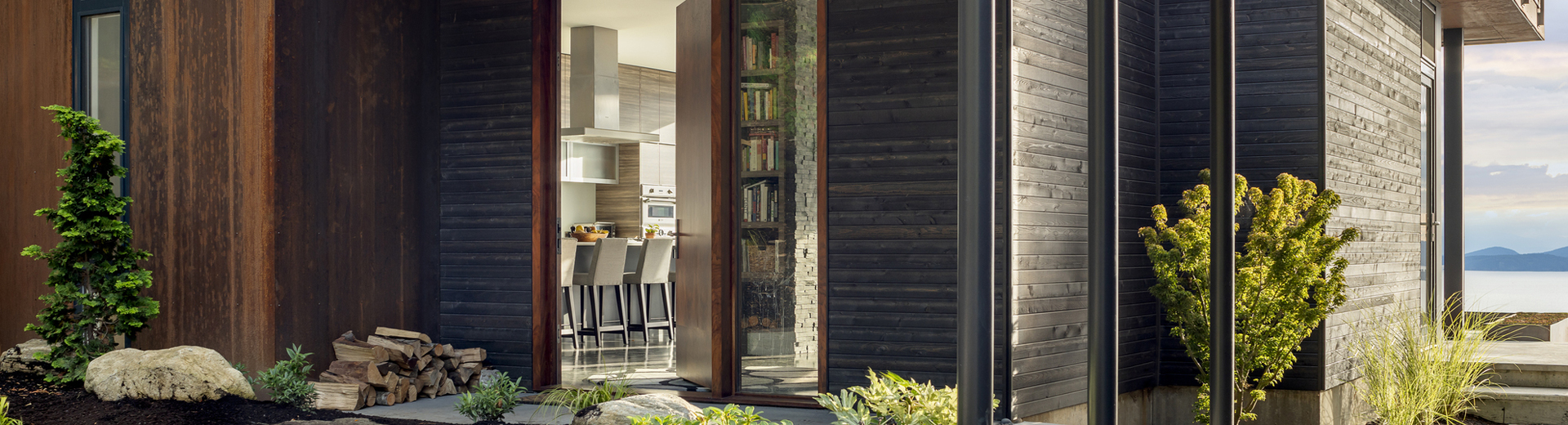
Entrance doors also play a role in shaping how a building is perceived because they are often the point of contact between people and the structure, and their design can suggest openness, privacy, formality, or modern simplicity depending on the chosen style.
This makes entrance doors not only functional elements but also part of the overall architectural expression that defines how a building is experienced from the outside.
 Previous