


 English
  русский
  عربى
عربى  Français
 Metal Steel Door
Product
Didn't find the product you like?
We gonna help you find matched one fast
Popular Products
Didn't find the product you like?
We gonna help you find matched one fast


+86-13967452036
A Stainless Steel Invisible Door Handle only looks effortless once it's installed correctly, and that effortless appearance depends on a recess cut into the door with far tighter tolerance than a traditional protruding handle ever demands. A standard lever handle hides small gaps and installation variance behind its own bulk; a flush design has nowhere to hide either one.
Cutting the mortise pocket that a Stainless Steel Invisible Door Handle sits inside has almost no margin for error, since a recess cut even slightly shallow leaves the plate standing proud of the door surface, defeating the entire flush-mount concept the product is built around. A recess cut too deep, on the other hand, leaves a visible gap around the plate edge that catches dust and looks unfinished rather than clean. Matching the recess dimensions precisely to the handle's plate profile during template design, rather than leaving field cutting to on-site judgment, is what keeps installation results consistent across different doors and installers. Supplying a routing template alongside the hardware itself, sized to the exact plate dimensions, turns a tolerance that would otherwise depend on individual installer skill into a repeatable cut.
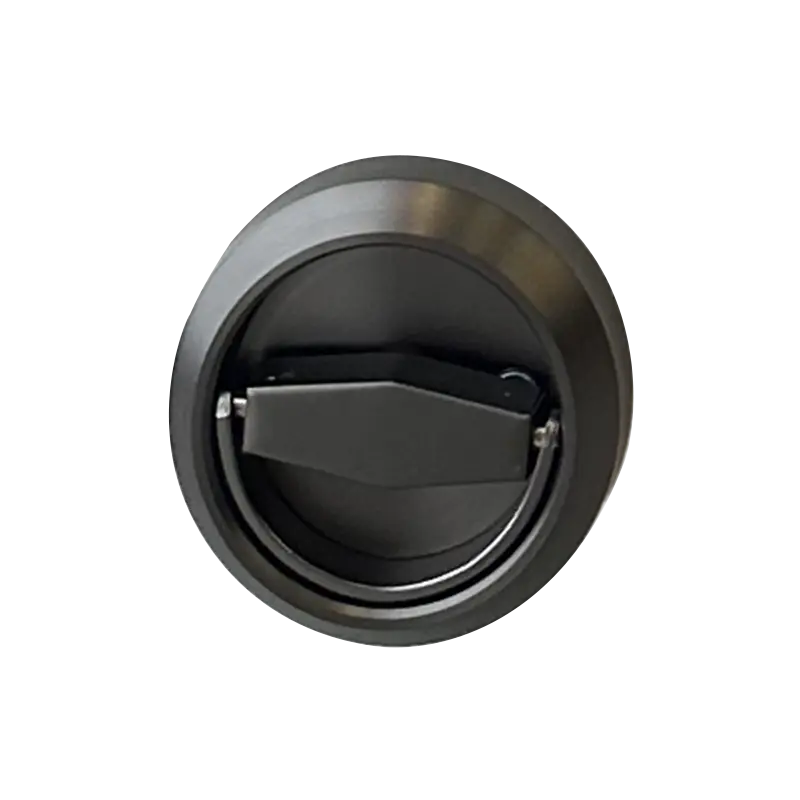
Without a visible lever to grip, designs in this category commonly rely on a push-to-open magnetic or mechanical latch hidden behind the flush plate, and that latch mechanism has to work smoothly for the entire concept to function day to day. A Stainless Steel Invisible Door Handle built around a magnet that's too weak lets the door swing open unintentionally or fails to hold it flush against the frame, while a magnet that's too strong makes the push action feel stiff and unsatisfying to actually use. Latch spring tension and magnet strength both get tuned together during development, since either one adjusted in isolation throws off the balance between a door that stays closed and one that opens with a light, reliable push. Testing that push action across hundreds of open-close cycles during development surfaces whether the mechanism holds its feel over time or starts drifting toward too loose or too stiff well before a customer would notice on a showroom sample.
On a door with a traditional handle, scuffs and fingerprints spread across a lever and a separate plate, diluting their visual impact. A Stainless Steel Invisible Door Handle concentrates all of that visible contact onto one small flush surface, which means finish choice carries more weight here than it does on conventional hardware. A brushed or matte stainless finish hides fingerprints and light scuffing better than a mirror-polished surface, which shows every touch point clearly against its reflective background. Corrosion resistance matters just as much on an exterior application, since a flush plate on a Stainless Steel Invisible Door Handle exposed to weather has no surrounding bezel or trim to mask early signs of wear the way a bulkier handle assembly would.
Recess precision, latch reliability, and finish selection all work together on a Stainless Steel Invisible Door Handle, and a gap in any one of the three undermines the minimalist look the whole product category is built to deliver.