


 English
  русский
  عربى
عربى  Français
 Metal Steel Door
Product
Didn't find the product you like?
We gonna help you find matched one fast
Popular Products
Didn't find the product you like?
We gonna help you find matched one fast


+86-13967452036
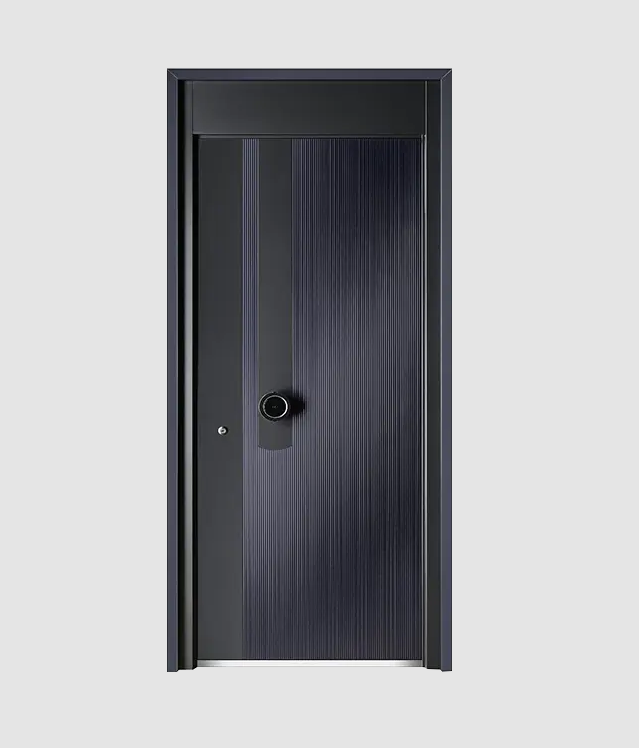
An entry door does more than keep intruders out. It also separates indoor air from outdoor air. A solid core metal exterior door with proper insulation can reduce heat loss in winter and heat gain in summer. The savings on energy bills add up over time.
Many homeowners assume steel doors are cold. That is true for uninsulated steel doors. But a solid core metal exterior door is built differently. The steel skins are just the outer layers. Inside, a dense foam core stops heat from moving through.
How the insulation works
Heat moves through materials in two ways. Conduction is direct transfer through solid material. Convection is movement through air gaps. A solid core metal exterior door blocks both.
The foam core inside a solid core metal exterior door has millions of tiny closed cells. Air cannot move through them. The foam itself is a poor conductor of heat. This combination gives the door a high insulating value.
Compare this to a wood door. Wood is naturally insulating but can warp. Compare it to a hollow steel door. Hollow doors have air gaps inside, but air moves within those gaps. That movement carries heat. A solid core metal exterior door with foam filling stops that movement completely.
Measuring thermal performance
Insulating value is measured as R-value or U-value. Higher R-value means better insulation. Lower U-value means less heat transfer. A solid core metal exterior door typically has an R-value between 5 and 10, depending on core thickness and foam density.
Hollow steel doors without insulation might have an R-value of 1 or 2. That is a significant difference. Over a year, a solid core metal exterior door can reduce heating and cooling losses noticeably.
The door frame also matters. A solid core metal exterior door with a steel frame needs thermal breaks. A thermal break is an insulating strip between interior and exterior steel surfaces. Without it, heat can bypass the core through the frame.
Stopping drafts
Insulation only works if the door seals properly. A solid core metal exterior door should have weatherstripping around all four edges. The bottom sweep should contact the threshold firmly.
The weight of a solid core metal exterior door helps here. Heavier doors compress weatherstripping more effectively than lightweight doors. The seal stays tight even in windy conditions.
Some models use magnetic sealing strips, similar to a refrigerator door. These help pull the door tight against the frame and reduce small air gaps.
Condensation prevention
When warm, moist air hits a cold surface, condensation forms. On a poorly insulated door, water droplets may appear on the interior surface in winter.
A solid core metal exterior door with good insulation keeps the interior steel skin warmer. The surface temperature stays closer to room temperature, reducing condensation risk.
This matters for durability. Moisture can affect nearby flooring or wood trim around the solid core metal exterior door, especially over long periods.
Glass sections and energy loss
Many steel doors include glass panels or side lites. Glass insulates less effectively than a solid core metal exterior door core. Large glass areas reduce overall thermal performance.
If glass is needed, double or triple glazing with low-E coatings and gas fills improves performance. Even so, a solid core metal exterior door with minimal or no glass will generally perform better thermally.
For energy efficiency, choose a solid core metal exterior door with limited glazing.
Installation quality affects performance
Even a high-quality solid core metal exterior door will underperform if installed poorly. Gaps around the frame allow air leakage that bypasses insulation.
Low-expansion spray foam between the frame and wall opening helps seal gaps. Proper leveling of the threshold is also important to prevent bottom air leaks.
Long-term value
A solid core metal exterior door costs more upfront than a hollow steel door. The energy savings help offset that difference over time. In colder climates, payback may take a few years; in milder climates, longer.
Beyond energy savings, the structure also resists denting better than hollow doors. The foam core supports the steel skins, reducing deformation over time.
Over the long term, a solid core metal exterior door provides both improved comfort and reduced energy loss, making it a practical upgrade for many homes.

 Previous