


 English
  русский
  عربى
عربى  Français
 Metal Steel Door
Product
Didn't find the product you like?
We gonna help you find matched one fast
Popular Products
Didn't find the product you like?
We gonna help you find matched one fast


+86-13967452036
Building departments in wind-prone counties don't accept an entry door on appearance alone anymore. Permit reviewers ask for test reports, design pressure ratings, and proof that the assembly was evaluated as a unit, not just a frame with glass dropped in later. That paperwork trail is exactly what separates aluminum impact front doors from a standard imported entry system, and it's the part buyers never see until a project gets held up at inspection.
Most regional codes reference ASTM or Miami-Dade protocols, which subject a door assembly to large-missile impact, cyclic wind pressure, and water infiltration testing before it earns approval. A door isn't rated in isolation; the frame, glazing, hardware, and anchoring method all get tested together as one system. This is why swapping a lock or resizing a panel on a certified unit can technically void the rating. Aluminum impact front doors sold with documented test numbers let a contractor pull permits without redoing evaluations project by project, which shortens the approval timeline considerably.
Hurricane-rated entry doors carry a Notice of Acceptance or equivalent regional certificate, and specifiers should confirm that number matches the actual product delivered, not just a similar model from the same catalog.
|
Requirement |
What It Verifies |
Typical Document |
|
Large missile impact |
Resistance to wind-borne debris |
Impact test report |
|
Cyclic wind pressure |
Structural integrity under repeated load |
ASTM E1996/E1886 report |
|
Water penetration |
Seal performance during driving rain |
Water infiltration test |
|
Design pressure rating |
Maximum wind load the unit can handle |
DP rating label |
|
Regional approval |
Compliance with local building code |
NOA or state product approval |
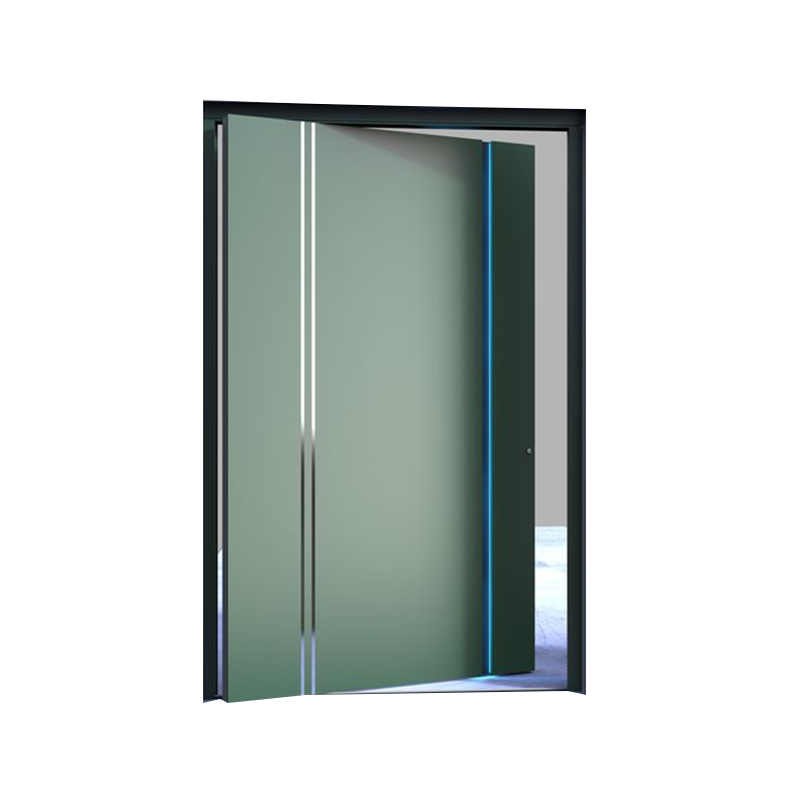
Reviewing these five items before ordering aluminum impact front doors avoids the common problem of a door arriving on site without paperwork that matches local code language.
Permit delays and failed inspections tend to trace back to a handful of recurring issues.Substituting hardware or glazing after the unit was originally tested.Installing a door rated for one wind zone in a higher-rated zone.Missing labels or documentation at the time of inspection.Anchoring methods that differ from what the test report specifies.
Contractors who confirm these details with the supplier before shipment generally avoid rework, since aluminum impact front doors installed outside their tested configuration can be flagged during final inspection even if the door itself is structurally sound.
Architects and specifiers usually work backward from the local design pressure requirement rather than picking a product first. Once the required DP rating is known, matching it to available hurricane-rated entry doors narrows the product search considerably. From there, glazing options, panel width, and finish can be adjusted without affecting the certification, provided the supplier confirms the configuration stays within tested parameters.
Custom sizing is where projects often run into trouble. A tested unit is only valid within the dimensions and configurations covered by its report, so oversized or non-standard openings may require a separate evaluation. Suppliers experienced with aluminum impact front doors for export markets typically flag this early rather than after production has started.
Not every supplier maintains current test reports for every product line, and expired or mismatched documentation is a common cause of last-minute project delays. Requesting the following before finalizing an order reduces that risk.Current test reports matching the exact product SKU.Regional approval numbers valid for the installation location.Installation instructions consistent with the tested anchoring method.Warranty terms that reference the certified configuration.
A manufacturer able to provide this documentation alongside aluminum impact front doors demonstrates a production process built around code compliance rather than one adapted after the fact, which matters more to permit offices than any design feature.
Code compliance isn't a fixed checklist; it shifts by county, wind zone, and building type, so the safest approach is confirming current local requirements before finalizing a specification. Suppliers who can match hurricane-rated entry doors to documented regional approvals give contractors a clearer path from order to final inspection, reducing the back-and-forth that otherwise stalls a project timeline.

 Previous